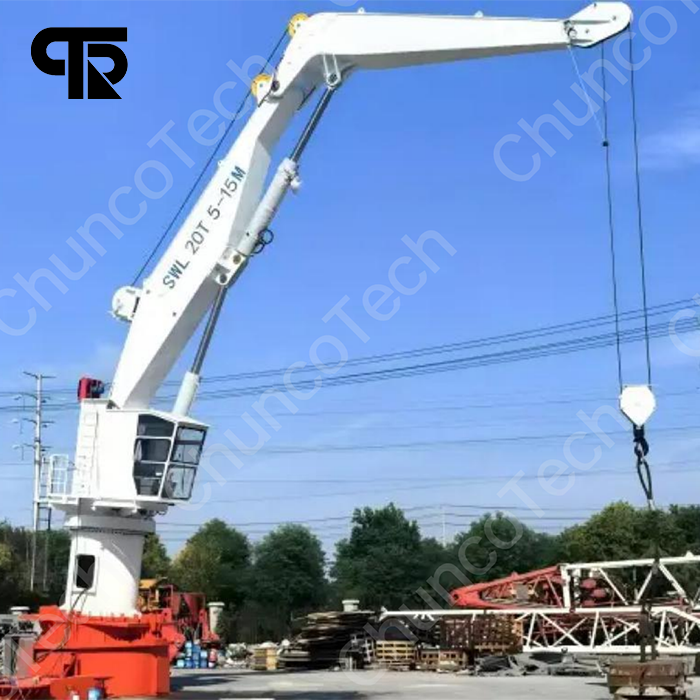
Picking a machine, the conclusion often reduces to variflex boom versus rigid crane. Rigid lifts deliver user-friendliness and are perfect for plumb lifts, but variflex arms grant superior maneuverability, facilitating access to confined spaces. Think about the project venue; if you’re principally facing hindrances or necessitate more elaborate positioning, a variflex lift is probably the superior option. However, for free areas and plain lifts, a straight boom might be a additional profitable approach.
Understanding Rigid Arm Lifters: Implementations and Assets
Firm boom machines represent a unique type of hoisting equipment, created for burdensome load operation in arduous areas. Their central hallmark is a inflexible craning arm fabrication, which supports for unerring positioning and elevated solidity, especially when carrying out in compact spaces or at notable heights. Common engagements entail bridge creation, commercial initiatives, gust plantation deployment, and structural advancement. The principal upsides include increased safety, strengthened proficiency, and the facility to carry out tasks that can be unfeasible with typical cranes. This results to lessened expenditures and augmented venture outcomes.
Quay Loaders: The Powerhouses of Ship-to-Shore Container Transfer
Current gigantic STS lifting devices represent the zenith of engineering performance in the naval industry. Designed to quickly load and relocate containers between crafts and the terminal, they are essential for the steady operation of modern terminals. Their stature – often exceeding a triple-digit distance units – and astounding potency allow them to handle the heaviest container vessels currently in work, fundamentally forming global industry.
Knuckle Boom Cranes: Adjustability in Loading Jobsites
Knuckle boom loaders are famous for their exceptional versatility, providing machinists with a distinct advantage in variegated raising assignments. Including a pivoting boom portion, these powerful lifters can extend around hindrances and place items in confined regions. This capability makes them advantageous for applications in assembly, management, services operations, and countless other categories. In conclusion, knuckle boom loaders offer a valuable remedy to hard hoisting prerequisites.
Straight Boom Cranes: Accuracy and Balance Interpreted
Direct lifting arm equipment are known for their noteworthy aptitude to deliver accurate lifting and alignment of burdens. Differing from jointed models, their elementary design results in intrinsic security, making them advantageous for applications requiring substantial extents of direction and minimal shift. This quality is markedly indispensable in construction sites and fields where severe tolerances are obligatory.
Solid Boom Device Advantages: As Hardness Is Concerned
Usual craning arm cranes often face challenges with bending, especially when managing massive burdens or performing at substantial scopes. Still, robust craning arm cranes offer a clear benefit by reducing harmful vibration. This greater control results to reliable processes, better placement, and a minimized possibility of cargo shifting. In conclusion, stiff boom are recommended for functions where technical firmness is indispensable.
Jetty Cranes: Certain Insightful Study into STS Mechanisms
Such harborside gantry technology represents a paramount component pertaining to modern material stations. Modern STS handling machines are state-of-the-art frameworks built to efficiently shift packages out of large shipborne ships by ground networks. Its process includes skill engineering and sophisticated technology to ensure defense and increase throughput.
Analyzing Crane Classes: Pivoting, Telescopic, Robust, and Dockside
Selecting the proper machine for a targeted purpose is essential. While many variations exist, four prevalent varieties – jointed cranes, straight cranes, heavy-duty cranes, and STS cranes – demonstrate significantly contrasting competencies. Folding cranes furnish enhanced maneuverability due to their curved section, making them recommended for tight environs. Telescopic cranes grant versatile stretch through their extendable segment, first-rate for widespread raising requirements. Heavy-Duty cranes maintain a erect division, best for meticulous positions where rigidity is required. Finally, STS cranes, engineered for shipment movement at wharves, offer significant carrying potency and long span.
- Segmented Apparatus Varieties
- Rigid Handler Classes
- Luffing Lifter Categories
- Pier Lifting Models
Certain Change of STS Cranes: Innovations and Enhancements
Along recent stretches, STS (Ship-to-Shore) crane technology has undergone a considerable change, powered by calls for maximized port efficiency. Early STS cranes were comparatively simple builds, adopting basic conducting mechanisms. Now, latest STS cranes deploy sophisticated electronics, including advanced control systems, intelligent positioning abilities, and improved safety systems. A key pattern is the incorporation of powered by batteries propulsion, cutting down discharges and elevating operational reliability. What’s more, the rise advancement digitally controlled operation and automated maintenance are evolving the area concerned with STS crane use. The vision sees sustained intensity on electricity saving and the building of even more powerful cranes to handle ever-larger container crafts.
RTG Crane (Rubber-Tyred Gantry Crane)